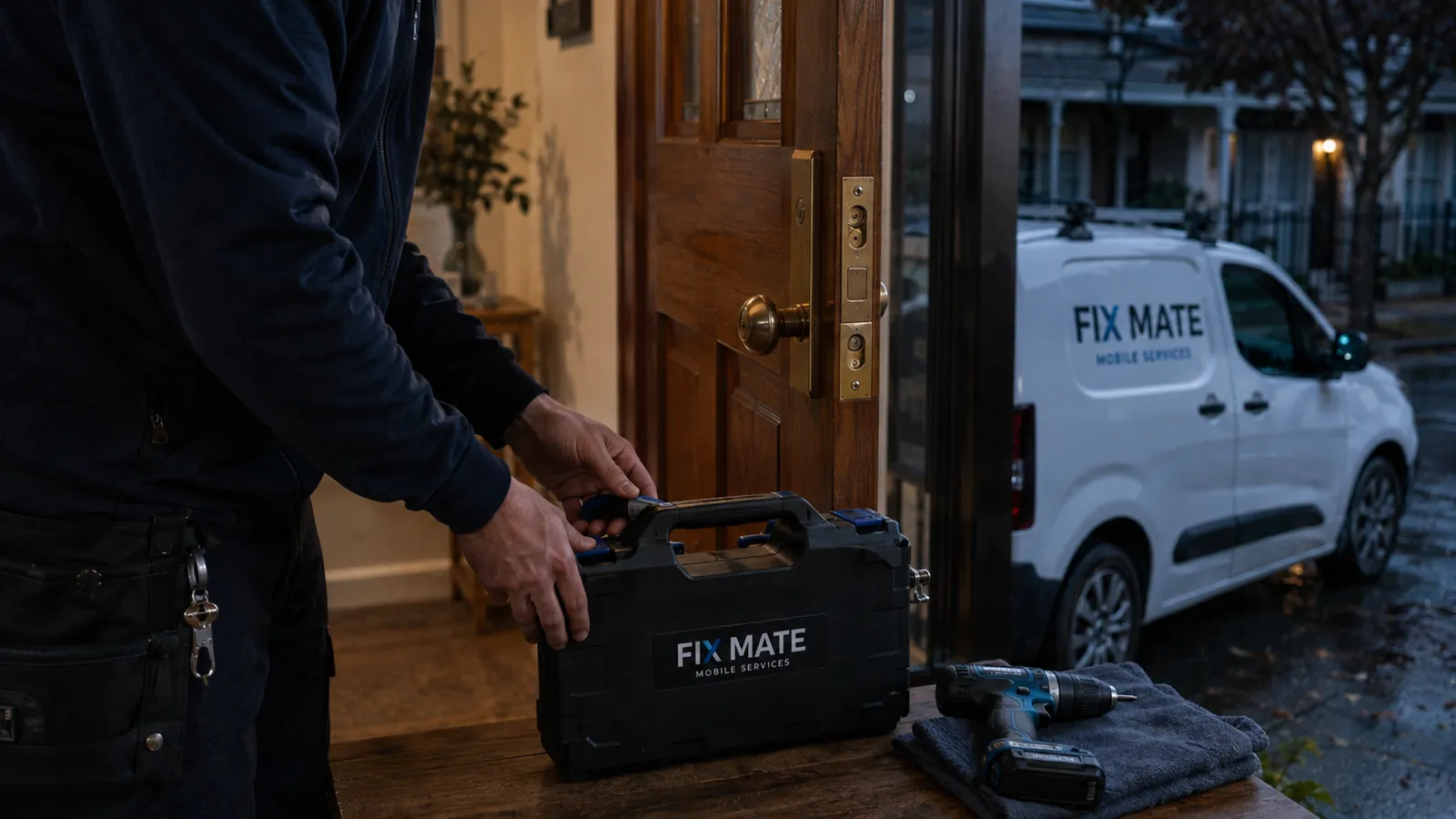
Most residential locks open intact
The great majority of house and unit lockouts in Melbourne end with the lock still working and the door unmarked. That is the normal outcome, not a lucky one.
The reason is straightforward: non-destructive methods are faster for the locksmith and cheaper for you. There is no incentive anywhere in the job to reach for a drill first.
When a lock genuinely cannot be opened intact
There are real situations where damage is unavoidable, and an honest locksmith names them before starting rather than after:
- The lock is already broken — a cam has sheared, a spring has failed, or the mechanism has seized entirely.
- A key has snapped deep inside and cannot be extracted without the cylinder coming apart.
- The lock is a high-security cylinder specifically designed to resist non-destructive opening. That is precisely what you paid for when you bought it.
- Somebody has already attempted entry and deformed the mechanism.
- The door itself has dropped or the frame has moved enough that the bolt is jammed against the strike under load.
In those cases the cylinder is usually the only casualty, and it is replaceable. The door, the handle and the frame come through unharmed.
The question to ask on the phone
Ask this, in these words: "Will you try to open it without damage first, and will you tell me before you do anything that damages it?"
The answer tells you almost everything. Anyone who cannot commit to it, or who talks around it, is not the person you want at your door at midnight.
The other half of the answer: why did it fail?
If a lock had to be drilled because it was already failing, the useful conversation is about what caused it. Locks rarely die suddenly — they get harder to turn for months first, and most people adapt without noticing they are adapting.
If you have been lifting the door, jiggling the key or turning it twice, that is not a habit. That is a warning, and it is much cheaper to act on before the lock fails than at 1am afterwards.