There are two doors, and they belong to different people
Your unit door is yours. You can have it opened, rekeyed or upgraded, and nobody's permission is required beyond your own if you own the apartment.
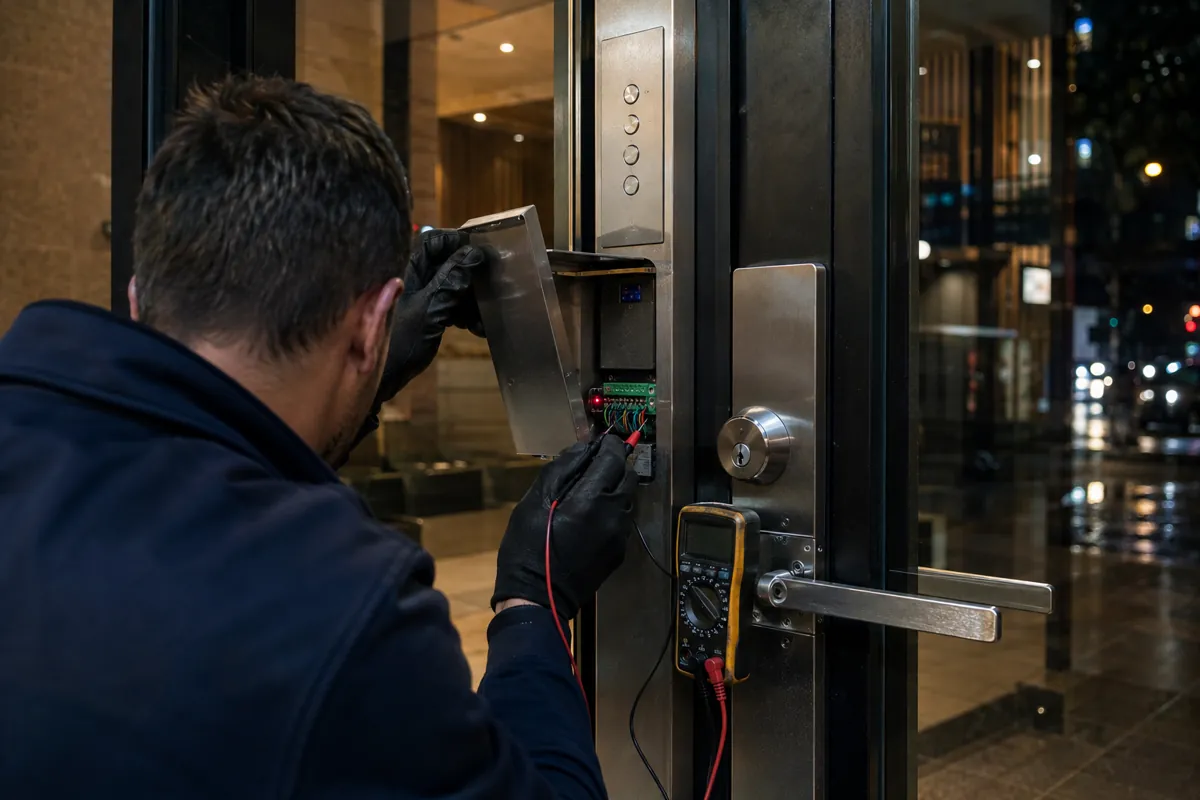
The building's street entrance, the lift lobby, the car park roller door, the bin room and the storage cage are not yours. They belong to the owners corporation, and they are almost always on a restricted key system.
Why a locksmith will not cut you a common-door key
A restricted key uses a patented profile that only an authorised locksmith can cut, and only on written authority from whoever controls the system — usually the owners corporation or the building manager.
So a locksmith who offers to cut a common-area key on the spot is either mistaken about what they are holding, or willing to do something they should not. Neither is reassuring.
What actually gets you through the street door
- The intercom. Most Melbourne blocks have one, and most residents will release the door for a neighbour who is clearly locked out.
- Building management or the concierge, where the building has one. Larger CBD and Southbank towers usually do, and they can often verify you against the resident list.
- A neighbour or a friend in the building with a fob.
- The car park entrance, if you have a remote for it in the car.
Once you are inside the building, your own unit door is an ordinary locksmithing job.
Tell us which door before we drive
This is the single most useful thing you can say on the phone. "I'm locked out of my apartment" describes two completely different jobs, and only one of them is one we can solve by turning up.
If you own the apartment and want to change your own lock
Generally you can, with two caveats worth knowing before anybody starts cutting. Owners corporations often have rules about what the door looks like from the corridor — the handle, the finish, the hardware visible from the shared side.
And apartment entry doors are frequently fire-rated, which limits what can be cut into them and what hardware is permitted. That is worth checking first, not after.
If you rent, the lock is a matter for your rental provider or agent, and there are specific rules about consent and keys in Victoria.